
Are Redfin and Zillow Home Price Estimates Accurate?
As a real estate broker with over 15 years of experience navigating Chicago’s always changing housing market, I run into this question daily. Whether I’m sitting down with sellers in the Gold Coast, meeting buyers in the West Loop, or consulting with luxury investors looking at high-rise penthouses in Lakeshore East, automated valuation models (AVMs) like the Zillow Zestimate and the Redfin Estimate almost always enter the conversation.
It’s completely understandable why. These digital tools offer instant gratification—with a single click, you get a slick number representing what your property might be worth. But as someone who has earned the "Top Producer Award" from both the Chicago Association of Realtors and my brokerage, Jameson Sotheby's International Realty, I can tell you that trusting a computer algorithm to price a multi-million dollar property can be a costly mistake.
A Chicago Luxury Realtor’s Take
So, are Redfin and Zillow home price estimates accurate? Below I discuss how these estimates work, where they fall short—especially here in Chicago—and why there is simply no digital substitute for real human expertise.
What Are They?
At their core, the Zillow Zestimate and the Redfin Estimate are automated valuation models (AVMs). They are algorithm-generated figures created by algorithms designed to estimate a property’s current market value.
While both tools serve the same general purpose, they operate differently:
-
Zillow functions primarily as a media and lead-generation marketplace, gathering data from public records, user inputs, and regional listing feeds.
-
Redfin operates as a tech-powered brokerage with direct access to local Multiple Listing Services (MLS), which generally gives its estimates a slight edge in data fresh updates for active listings.
Both platforms frame these numbers as a helpful "starting point," but many consumers treat them as an absolute appraisal—which they are not.
How They Are Calculated
Algorithms don't walk through homes; they digest data. Redfin and Zillow crunch hundreds of data points using machine learning models. The formulas primarily look at:
-
Public & Tax Records: Square footage, lot size, bedroom/bathroom count, tax assessments, and recording dates.
-
MLS Listing Data: Current list prices, recent sales prices of "comparable" properties, and time on market.
-
User-Submitted Edits: Information added manually by homeowners or agents (e.g., updating a finished basement or a kitchen remodel).
When a home goes active on the market, the algorithm relies heavily on the listing price itself to adjust its estimate upward or downward. For off-market homes, however, the median error rate spikes significantly because the algorithm is forced to guess based on stale or incomplete public records.
How Accuracy Is Impacted in a Large City Such as Chicago
Algorithms do best in homogenous suburban subdivisions where 20 houses share the exact same floor plan and lot size built in the same year.
Chicago is the exact opposite of that.
Our city’s real estate landscape is intricate, dense, and hyper-local. In Chicago, two buildings sitting side-by-side on the same block can have vastly different market values due to factors an algorithm cannot comprehend:
-
Historic architectural restrictions vs. ground-up modern developments.
-
Micro-location nuisances like proximity to the 'L' tracks or alley noise.
-
Building financial health, special assessments, and HOA reserves in co-ops and condos.
-
View corridors—a 20th-floor condo overlooking Millennium Park in the Loop carries a vastly different premium than the exact same floor plan facing an interior light well.
When an algorithm draws a 0.5-mile radius around a property in Chicago to pull "comps," it routinely mixes incompatible building types, street dynamics, and micro-markets together.
High-End / Multi-Million Dollar Homes vs. Lower-Priced Homes
If algorithm estimates struggle with standard housing stock, they struggle even more in the luxury sector.
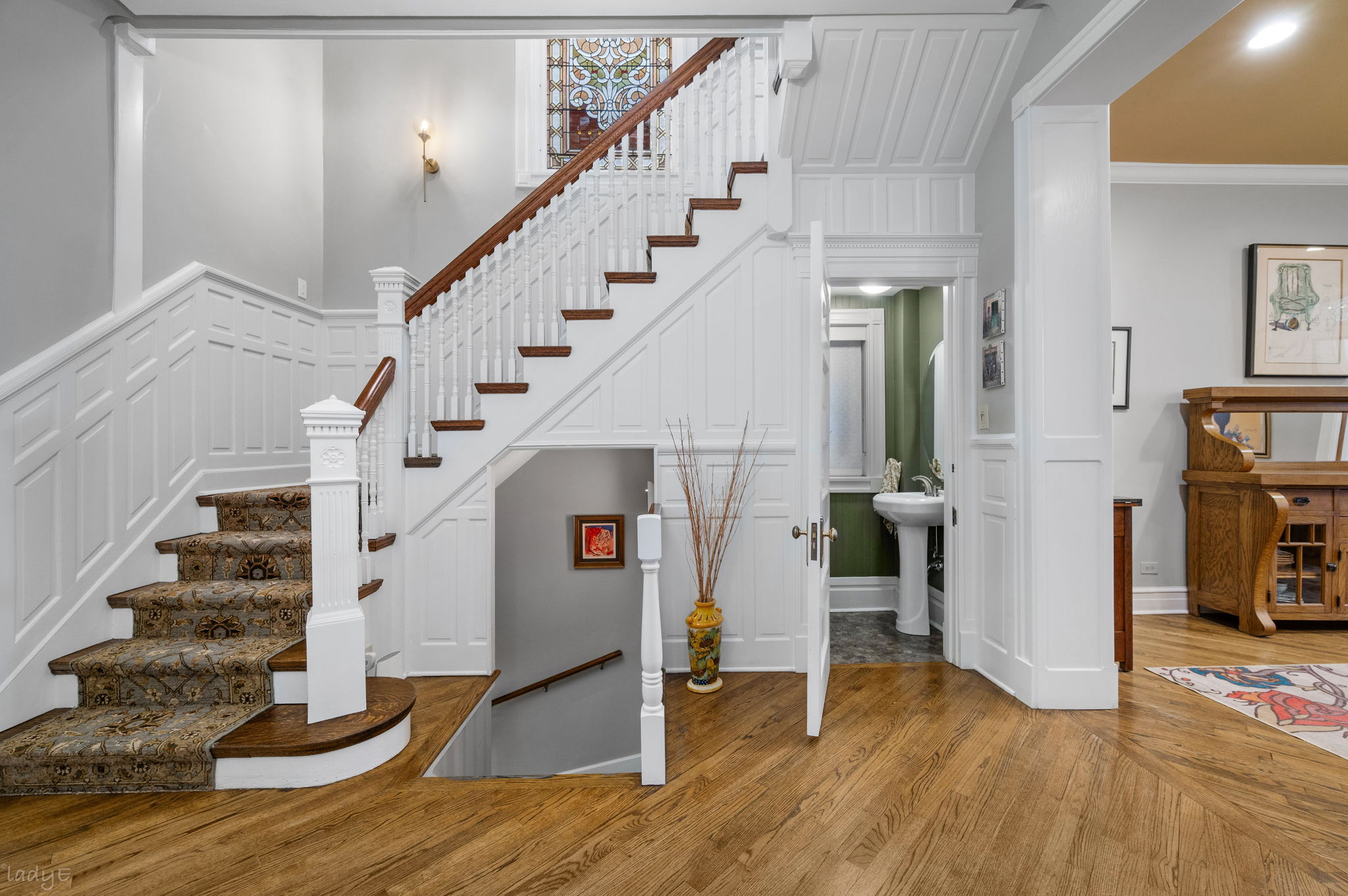
Luxury and multi-million dollar properties in neighborhoods like Lincoln Park, the Gold Coast, and Streeterville are custom creations. An algorithm cannot quantify:
-
Custom $200,000 Italian millwork or custom stone finishes.
-
Smart-home technology integrations, private elevator entries, or custom wine cellars.
-
Historic landmark prestige on streets like Astor Street vs. neighboring blocks.
Because luxury inventory is smaller and transactions occur less frequently, there are fewer data points for Zillow and Redfin to feed on. As a result, the algorithm either vastly underestimates a bespoke luxury home or overvalues a property that lacks high-end finishes, creating confusion for both buyers and sellers.
Condos vs. Single-Family Homes
The disparity in accuracy becomes even clearer when comparing property types across Chicago’s prime neighborhoods:
| Property Type | What Algorithms See | What Algorithms Miss |
| High-Rise Condos & Penthouses | Floor tier, square footage, bed/bath count. | View obstructions (e.g., a new tower breaking ground next door), tier popularity, ceiling heights, balcony orientation, and building amenities. |
| Single-Family Homes | Lot dimensions, total room count, year built. | Complete gut-rehabs vs. cosmetic updates, outdoor yard space design, historic facade preservation, and garage capacity. |
| 2–4 Unit Multi-Family Buildings | Total building square footage, gross rental income from tax returns. | Unit-by-unit condition, sub-metered utilities, lease terms, tenant quality, and expansion potential (duplexing down/up). |
| Townhomes | Association fee, bedroom/bathroom count. | End-unit light exposures, private rooftop deck builds, interior attached garages vs. detached carports. |
For high-rise condos in River North or South Loop, an AVM treats two units on different floors with different exposures as nearly identical. In reality, a skyline view or private outdoor terrace can swing value by six figures.
Neighborhoods: Micro-Markets Rule Chicago
Chicago isn't just one housing market—it's a collection of distinct neighborhood micro-markets, each with its own character and price trends.
A home in Bucktown priced at $1,500,000 behaves completely differently than a $1,500,000 property in Lakeview or Lincoln Park. Even within a single neighborhood like Old Town, moving across a boundary line like North Avenue or Wells Street changes buyer demand, school district boundaries, and price-per-square-foot benchmarks. Algorithms simply cannot adapt to these localized boundaries.
There Is No Substitute for the Human Eye
Algorithms analyze data, but humans buy homes based on value, emotion, and detail.
An AVM cannot walk through a front door and evaluate:
-
Natural Light: Does the floor-to-ceiling glass face a bright south exposure or a shadowy courtyard?
-
Floor Plan Flow: Is the layout wide and open, or tight and compartmentalized?
-
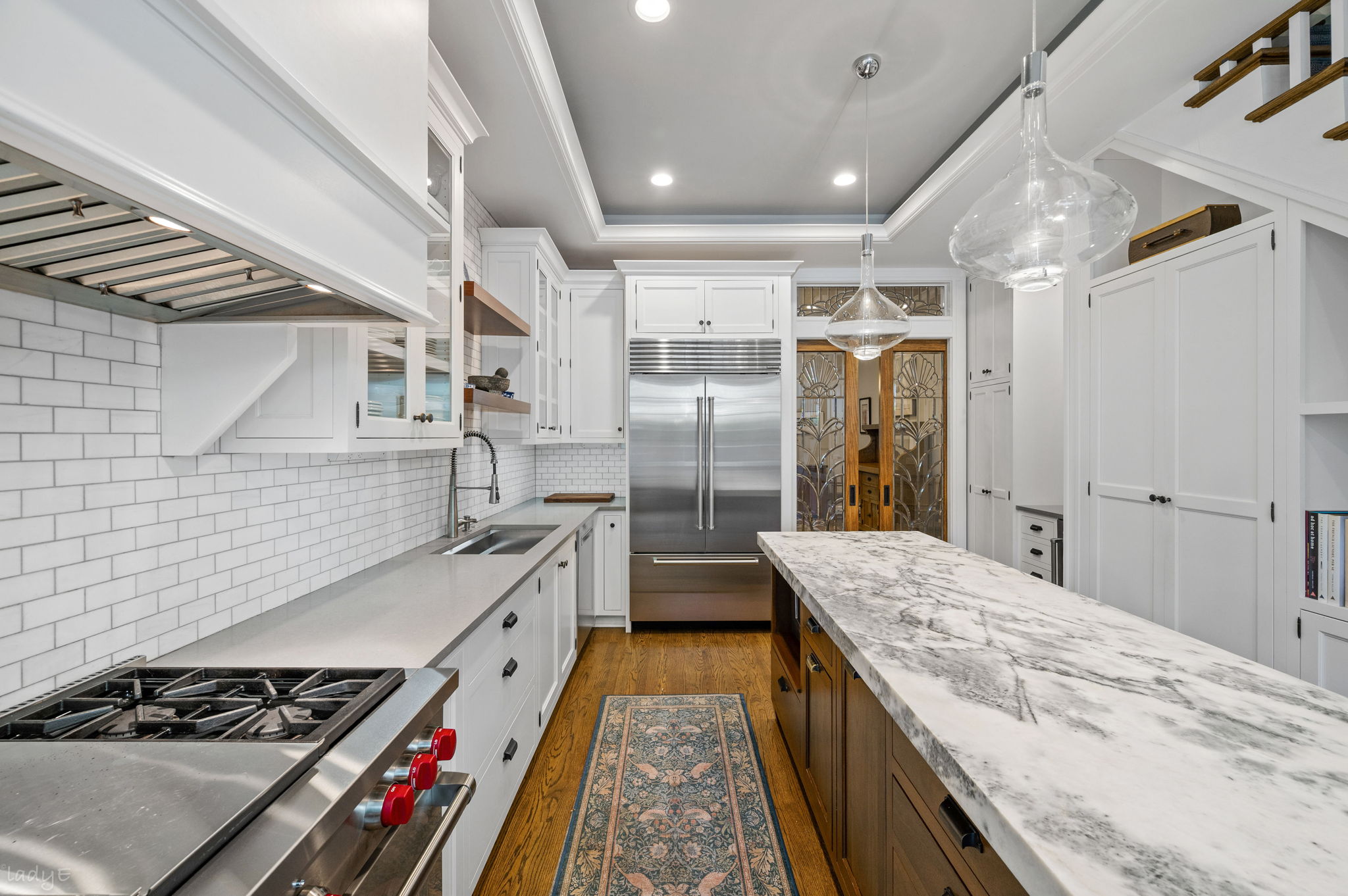
Build Quality: Was the home renovated with top-of-the-line appliances and custom cabinetry, or builder-grade materials designed for a quick flip?
-
Current Market Sentiment: How many active buyers are currently searching in this exact micro-pocket right now?
The human eye—backed by 15 years of boots-on-the-ground market experience—sees nuances that an automated code snippet will always miss.
How I Can Give a More Accurate Price Opinion
When you work with me, you aren't getting a computer-generated guess; you’re getting a comprehensive, hyper-targeted Comparative Market Analysis (CMA) built on real-time intelligence.
Here is how I determine a property's true market value:
-
In-Person Property Inspection: I tour the property in detail, evaluating finishes, floor plan functionality, view lines, and condition.
-
Hyper-Local Comp Analysis: I evaluate recent sales not just within the zip code, but within your specific building, block, or sub-pocket.
-
Off-Market & Private Network Data: Through Jameson Sotheby's International Realty and my private professional network, I track off-market sales, upcoming listings, and pending deals long before they hit public databases.
-
Current Buyer Dynamics: I cross-reference active buyer demand to price your home to attract competing offers, rather than relying strictly on past historical data.
Why Accuracy Matters
Pricing a home correctly isn't just an exercise in numbers—it directly affects your net proceeds and timeline.
-
If you rely on an overinflated online estimate: You risk overpricing your home. It sits on the market, grows stale, and eventually forces price cuts that often lead to selling for less than market value.
-
If you rely on a deflated online estimate: You leave tens or hundreds of thousands of dollars on the table when selling—or make a lowball offer on a dream luxury condo and miss out in a competitive scenario.
Whether you are buying your first luxury high-rise, selling a single-family home in Lincoln Park, or expanding an investment portfolio across Chicago’s top neighborhoods, accurate pricing is the foundation of a successful strategy.
Ready for a True Valuation of Your Home?
Skip the algorithmic guesswork. If you’re curious about what your property is actually worth in today's Chicago market, I’m here to help.
Visit my website at www.ryanhardychicago.com/home-evaluation/ to request a complimentary, personalized valuation or schedule a consultation today. Let’s make sure your next real estate decision is backed by real experience and proven results.
Enjoy this blog post? Click here to subscribe for updates
Leave A Comment